This Week in Logistics: Volatility Is the Operating Environment
Fuel prices are swinging fast, freight capacity is tightening, and Amazon’s logistics benchmarks are reshaping customer expectations. Here’s what logistics operators should focus on this week to protect margins, manage risk, and stay competitive.
Author:
Shaun Hagen
Published:
May 15, 2026
TABLE OF CONTENTS
If I had to frame this week in one sentence, it would be this. Volatility is no longer a disruption to the operating environment. It is the operating environment. And the operators who are winning are the ones who plan for the range, not the headline.
I'm Shaun Hagen, CEO of CartonCloud. I've spent the last decade working with 3PLs, freight forwarders, and in-house logistics teams through fuel cycles, capacity crunches, and every wave of platform competition the category has thrown at them. This week, three pressures are stacking at once, and each one changes a planning assumption most operators have been working from for years.
Brent moved $18 in a single week — from $115 down to $97 on ceasefire hopes, then back above $105 after Trump called Iran's latest proposal totally unacceptable. CVSA road check pulled thousands of trucks off the road in a market where DAT says truck availability is already at a decade low. And the first week of reaction to Amazon Supply Chain Services landed with one number every mid-market operator needs to know: 96.4% on-time delivery.
Three pressures, all stacking, all in the same week. Here's what they mean for your planning.
The fuel volatility is structural, not temporary
Over the last few episodes, we've tracked how oil has responded to the Hormuz crisis. First the spike, then the blockade premium, then the ceasefire dip, then the escalation surge. This week the pattern changed again. Brent moved from $115 to $97 on hopes of a Pakistan-mediated deal, then surged back above $105 after Trump rejected the proposal.
That is an $18 swing in one week. The important thing is that neither the hope nor the rejection was irrational. Both were real events with real consequences. The hope was based on actual diplomatic contact. The rejection was based on an actual policy decision.
What that means for operators is that planning for a single price point is now structurally flawed. You cannot run your margins against $100 Brent and assume that is the number. You need to run them against $85 and $130 and make sure the business works in both.
Last episode I said that every fuel surcharge model built on pre-February assumptions is now structurally wrong. This week I would go further. Every fuel surcharge model built on a single number is wrong. The discipline now is to build a pricing cadence that adjusts in both directions.
When oil drops $18 on hope, your customers will ask why the surcharge has not moved. When the surge is back on rejection, you'll need to recover that cost within days, not weeks.
The operators who sold themselves on flat rates and lazy surcharges are the most exposed right now. The gap between those operators and the ones who built flexible pricing into their contracts is widening every week.
"Every fuel surcharge model built on a single number is wrong. The discipline now is to build a pricing cadence that adjusts in both directions."
Capacity is tightening from every direction at once
CVSA International Road Check started today and runs through Wednesday. For 72 hours, inspectors across the US, Canada, and Mexico will conduct close to 15 inspections per minute. The focus this year is ELD tampering and cargo securement. Last year, 58,382 violations were issued for falsification of records of duty status alone.
In any normal market, road check causes a temporary capacity dip. This is not a normal market.
DAT's latest weekly data shows truck posts fell 5% week on week heading into the blitz, while load posts climbed. Flatbed line haul rates hit $2.70 a mile, up for the eighth consecutive week — the highest Week 19 national average ever recorded. Reefer load-to-truck ratio jumped to 16.4, the highest of the year. And that's before Mother's Day floral volumes in the Southeast or produce season just getting underway.
What makes this different from a typical road check tightening is that the capacity pressures are stacking on top of each other:
Fuel economics are forcing marginal carriers off the road Compliance crackdowns are permanently removing non-compliant capacity Seasonal demand is layering on top Road check is temporarily pulling additional trucks out of service for 72 hours
FedEx reactivating retired MD-11 freighter aircraft this week is the kind of detail that tells you more than any single market report. When a company of that size reaches into its retired fleet, it is not posturing. It is genuinely capacity constrained, and that constraint flows through the entire system.
For operators, the practical response is layered:
- If you have time-sensitive loads this week, they should already be tendered and booked
- If you have not communicated potential delays to customers, you should be doing it today
- If you do not have a backup carrier option identified for critical lanes, that is your immediate priority
- If your own fleet is going through inspection, make sure documentation, ELD records, and cargo securement are clean before the inspector arrives
Amazon Supply Chain Services and the 96.4% benchmark
Last week I said the question for mid-market operators is not whether Amazon is a competitor. The question is where they compete and where they do not. This week, that question got sharper.
P&G, 3M, and Lands' End were confirmed as early adopters of Amazon Supply Chain Services. This is not a small business pilot. These are enterprise shippers plugging into Amazon's 200+ fulfillment centers, 80,000 trailers, and 100 aircraft.
The number that landed hardest was 96.4% on-time delivery. That is the number that will appear in your next customer conversation. Not because your customer is about to switch to Amazon, necessarily, but because it resets the expectation of what good looks like. When a customer sees 96.4% from the world's largest logistics network, they start asking why their current provider is at 88, or 91, or whatever their number is.
One analyst predicted 20% of 3PLs will be out of business by 2030. I think that headline is designed to provoke, but the underlying point is real. The operators who will struggle are the ones who cannot articulate their own performance data, who cannot explain whether they beat Amazon's benchmark, and who do not have a clear answer to the question, "why should I use you instead?"
The operators who will thrive can answer that question precisely:
- "My on-time range for your freight type is this"
- "My exception resolution time is this"
- "My onboarding speed for new customers is this"
- "My ability to handle your non-standard, complex, regional, or time-critical freight is something Amazon's standardised platform does not do well"
That is the conversation. And it requires you to know your numbers.
"When a customer sees 96.4% from the world's largest logistics network, they start asking why their current provider is at 88, or 91, or whatever their number is."
The operator playbook for the next seven days
1. Build pricing that works across the range. Stop modelling against a single Brent price. Run your margins against $85, $105, and $130. If any of those scenarios break your business, fix the cost structure now. Build a surcharge cadence that adjusts in both directions, in days not months.
2. Manage this week's capacity crunch proactively. Road check is live today through Wednesday. If you have loads in the system that could be affected, communicate to customers now. Do not wait for the delay to arrive. The best operators talk to people early. They do not wait until the invoice and let customers get a surprise.
3. Know your own number. If Amazon's benchmark is 96.4% on-time delivery, what is yours? If you cannot answer that question with data, that is your first project this week. Not because you need to match Amazon, but because your customers will be asking. And the operator who can answer with confidence and specificity wins that conversation every time.
What to watch this week
- US–Iran ceasefire status — Brent will respond within hours to any development
- Road check out-of-service data as it comes through Wednesday and Thursday
- New enterprise adopter announcements from Amazon Supply Chain Services
- The RTCCO review hearing on May 25 in Australia
- US diesel prices — the three-week decline has likely reversed with Brent back above $105
Frequently asked questions about fuel volatility, capacity, and Amazon Supply Chain Services
Q: How should 3PLs and transport operators price for fuel when Brent is swinging $18 in a week?
A: Stop modelling against a single Brent price. Run your margins against $85, $105, and $130. If any scenario breaks the business, fix the cost structure. Then build a surcharge cadence that adjusts in both directions within days, not months — so customers see fairness when oil drops, and recovery happens fast when it spikes.
Q: What is the CVSA International Road Check and why does it matter for capacity this week?
A: CVSA International Road Check is a 72-hour inspection blitz across the US, Canada, and Mexico, with roughly 15 commercial vehicle inspections per minute. Last year, 1 in 5 vehicles inspected was placed out of service — around 13,000 trucks pulled off the road in one weekend. With truck availability already at a decade low, that's significant pressure on already-tight capacity.
Q: What is Amazon Supply Chain Services?
A: Amazon Supply Chain Services is a bundled offering Amazon launched in May 2026 that gives any business access to its logistics network: 200+ fulfillment centers, 80,000+ trailers, 24,000 intermodal containers, and 100 aircraft. It covers warehousing, freight forwarding, customs brokerage, transportation, and last-mile delivery — available regardless of whether a business sells on Amazon.
Q: How do mid-market 3PLs compete with Amazon Supply Chain Services?
A: Mid-market operators compete on the work Amazon's standardised platform handles poorly: complex, non-standard, regional, and time-critical freight. The defensible advantages are specialisation, local density, customer relationships, speed of onboarding, and the ability to handle exceptions. The discipline is knowing exactly where Amazon has structural density, and not competing there.
Q: What does FedEx reactivating retired MD-11 freighter aircraft signal about the freight market?
A: When a logistics company at FedEx's scale reaches into its retired fleet, it signals genuine capacity constraint, not posturing. It tells operators that air capacity is tight enough that bringing back aircraft FedEx had previously retired is now economically rational. That constraint flows through the entire system, including ground freight and intermodal.
The bottom line
Spot the pattern early, simplify your response. This week, plan for range, communicate before the pressure arrives, and know your number.
Explore the resource hub
Tips, tools, downloadable guides and stories from logistics teams who are working smarter.
This Week in Logistics: The Structural Pieces Are Clicking Into Place: FedEx Freight, Humanoid Robots, + What Oil Settling Actually Means
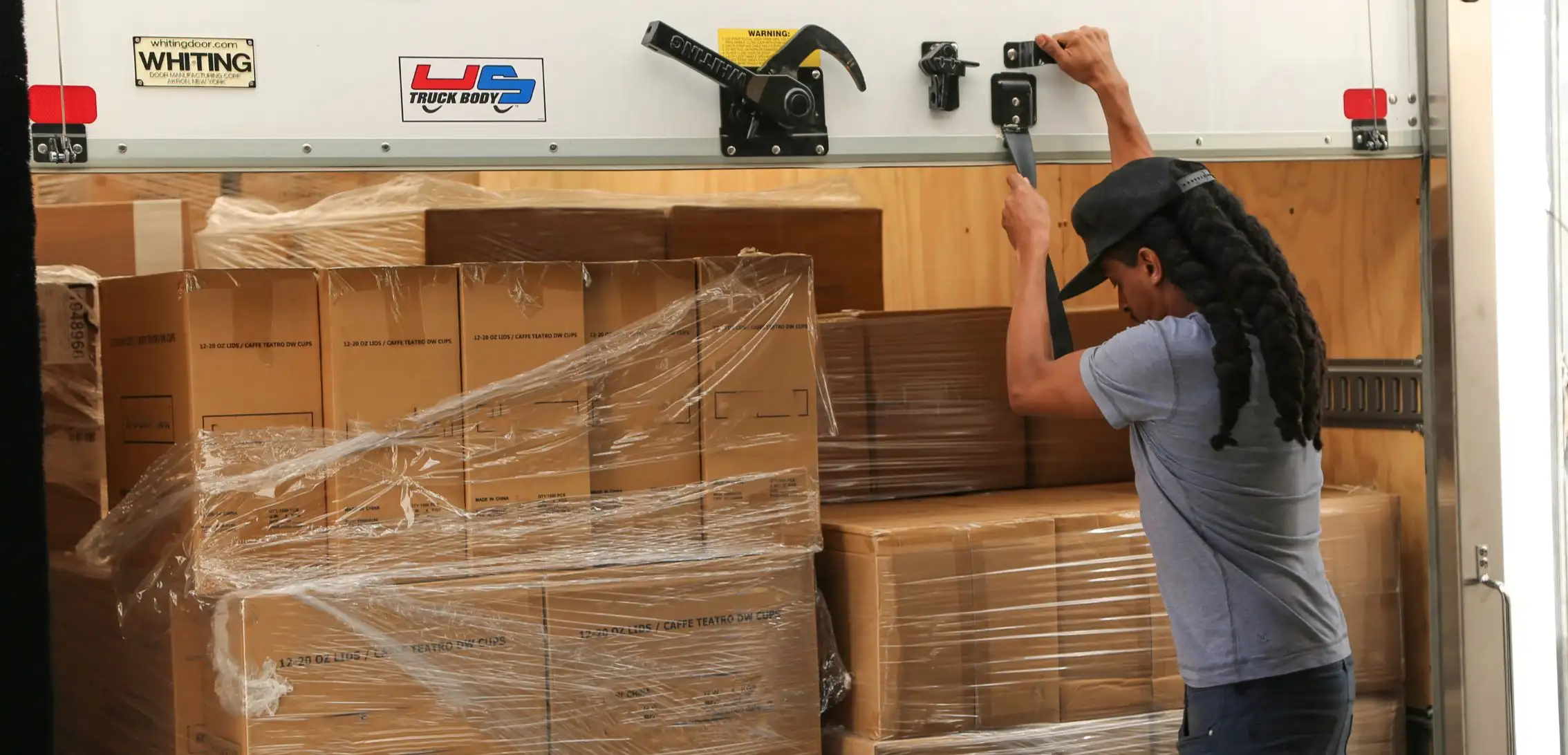
How to Deliver an Amazon-Like Experience When You're Not Amazon
.webp)
CartonCloud Reviews, Pricing, and Alternatives: What 3PLs Actually Want to Know

This Week in Logistics: How Do You Deliver an Amazon-Like Experience as a Non-Amazon Retailer? In Conversation with Shippit
.webp)
What is the best warehouse management software and why?

Through the Fuel Crisis: The Operator Playbook for 3PLs and Transport Companies
.webp)
Through the Fuel Crisis: The Operator Playbook

Big News: CartonCloud Connects to 150+ Carriers

May 2026 — New Feature Round-up

Every Missed Scan Creates Problems You Can’t See (Until it’s Too Late)

Finding the best Warehouse Management System (WMS) software for small businesses

This Week in Logistics: Hope Is Not a Plan: What the Iran Deal, FedEx Freight's Independence, + the RTCCO Review Mean for Logistics Operators This Week
.webp)
How to Reduce Admin in a 3PL Operation

Best 3PL Software Alternatives: 2026 Comparison Guide
This Week in Logistics: Aramco Says Oil Won't Normalise Until 2027 — and Two Other Shifts That Moved the Ground This Week

CartonCloud vs Da Vinci Comparison Guide for 3PLs
.webp)
What Home Depot’s Next-Day Delivery Push Means for 3PL Operations

This Week in Logistics: The Hormuz Fuel Crisis, Freight Upcycle + Amazon Supply Chain Update

April 2026 — New Feature Round-up
.webp)
Best 3PL Software for Small to Mid-Sized Logistics Providers in USA