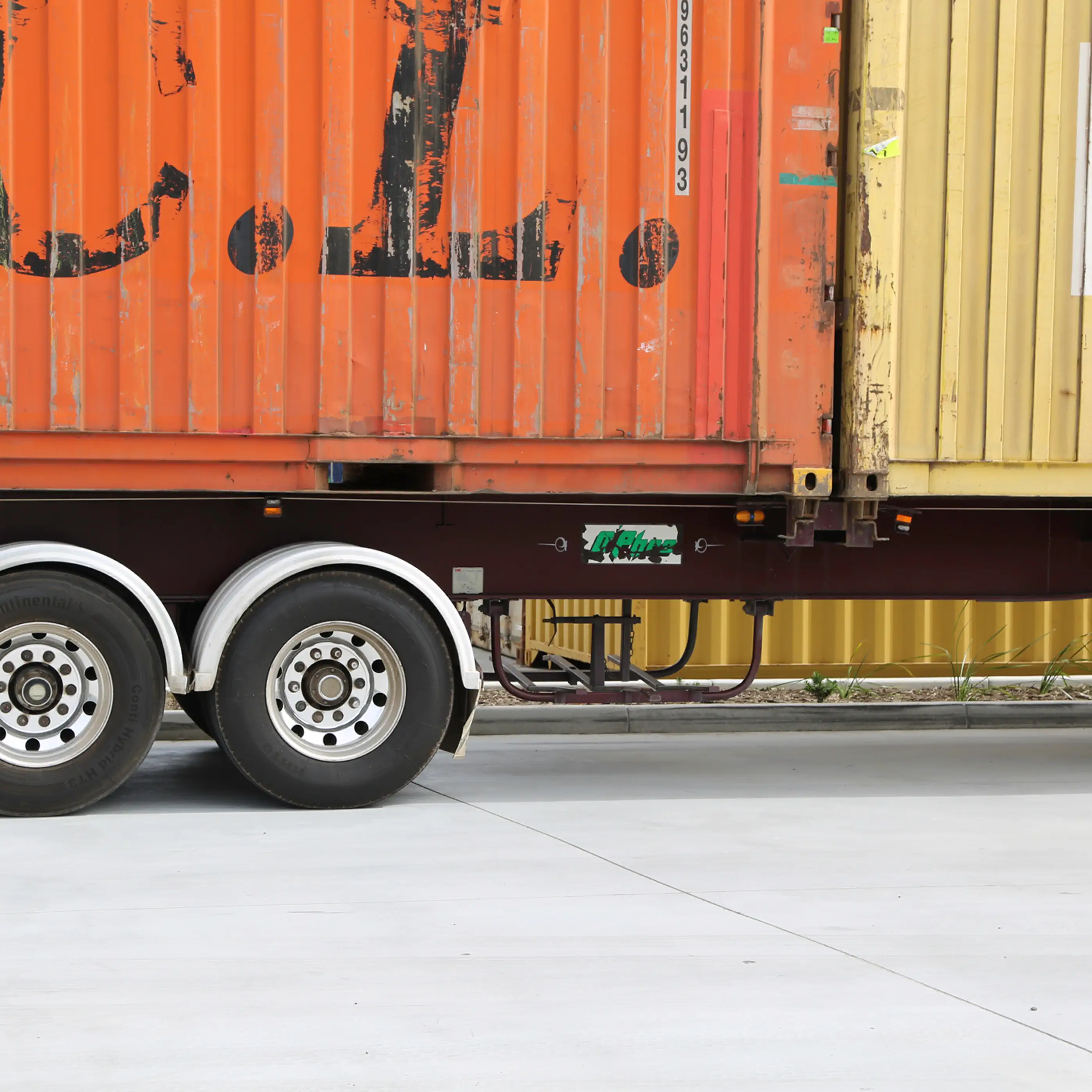
Are you capturing fuel use and rates?
Find out how to capture adjustable fuel levy charges for automatic invoicing with CartonCloud.
Published:
September 14, 2022

TABLE OF CONTENTS
With rising global oil prices, it’s becoming more critical than ever for small and medium businesses to capture fuel usage with scalable rates and minimize unnecessary fuel usage.
In Australia, Canada, and the United States, road transport is the primary mode of transport for most freight, making our logistics industries extremely susceptible to fluctuating fuel prices.
Earlier this year oil prices in some areas reached an eight-year high, a rise that impacted all levels of the supply chain and logistics industry, and continues to make waves. For SME logistics operators, this sustained price increase ahs meant operators must have the ability to adapt to changing market costs, in order to survive.
The good news is, businesses can mitigate the impact of the rising prices by reducing their fuel usage and also capturing additional fuel costs in their charges. We take a look at how you can minimize fuel usage where possible, optimize operations, and capture fuel levy rates.
Fuel Levy Calculator
With flexible charging systems in place, small businesses can account for changes in market costs and continue to budget appropriately for their own costs of services — to keep their fleets running and continue to provide freight transport services.
Fuel levy calculators use adjustable fuel levy rates to provide operators with an essential level of flexibility in the face of market fluctuations, allowing them to manage the rise in costs and continue to deliver their services throughout the rising costs.
A fuel levy is simply a surcharge that is applied in addition to your typical transport rates to cover fuel cost variances in the market. It means rather than using fixed service rates with a client; you can adapt transport rates to include the additional cost of fuel.
Within CartonCloud, you can also configure a primary or default fuel levy set at varying rates. The system’s automated fuel levy calculator will simply calculate the rates applied for each service or customer, depending on your set-up, and add to your invoices transparent and simplified payment.
From there, your invoice is automatically generated in CartonCloud and can be automatically pushed through to your accounting software, saving you time and ensuring your rates are correct each time.
Fuel Levy in CartonCloud is easy to set up and highly configurable, to allow you to charge precisely the correct rate to the right customer, so you don't miss out on precious revenue.
Optimized routes and transport lanes
Route optimization, fleet management, and intelligent software applications can make a significant difference for small and medium enterprises — allowing you to optimize resource allocation and reduce fuel use where possible.
In CartonCloud, you can use route optimization to find the shortest path or configure a route for the least amount of time to cover the deliveries on their list.
To manage routes across multiple trucks and a wider geographical area, you can also implement transport lanes to operationally group consignments and allocate them to drivers or trucks.
Transport Lanes can be used to dictate which delivery run a consignment is assigned to in your TMS, to optimize your fleet use for time management, resource management, and distance traveled.
Find out more about transport lanes here.
Want to know more?
To find out more about how to optimize your operations with CartonCloud, contact the team for a FREE DEMO and see how CartonCloud can help you grow your business.
Explore the resource hub
Tips, tools, downloadable guides and stories from logistics teams who are working smarter.

What We Heard at B2B World APAC: Large Brands Want Delivery Visibility, Not Just Warehouse Visibility
The Fastest WMS to Implement for E-Commerce Fulfillment 3PLs in the USA

This Week in Logistics: A Cost Rule Peak — Canada's Tariffs Go Live, FedEx Guarantees Your Duties, and Peak Season Surcharges Land

What's the Best WMS for Small 3PLs That Need an Easy Setup?

CartonCloud vs Extensiv: Which Platform Delivers More for 3PLs?

Get a Free, Honest Read on Your Operation, in About Two Minutes

CartonCloud’s Commitment to Security: SOC 2 Type 2 Audit Complete

How to Implement a WMS in Your Small 3PL Business: A Practical Guide
.webp)
This Week in Logistics: Multiple Warehouses, Multiple States, One Standard — How HD Warehousing Does It, With Special Guest Chad Hildebrandt, Owner & COO

August 2026: New Feature Round-Up

Warehouse Software for Cold Storage, Food, and Temperature-Controlled Logistics
This Week in Logistics: Season 2 Returns — US-Canada Tariffs, Oil Volatility, and Panama Canal Cuts All at Once
.webp)
How Do You Know You've Outgrown Basic Warehouse Systems? 7 Signs for Growing US 3PLs
.webp)
CartonCloud Named a 2026 "Great Supply Chain Partner" by SupplyChainBrain
.webp)
Dock Management: How We Built Visibility Into Every Delivery
.webp)
July 2026 — New Feature Round-up

What US 3PL Operators Really Say About Switching From Slow, Complex WMS Alternatives

CartonCloud vs Competitors: An Honest Comparison from an Implementation Specialist
.webp)
Running Multiple Sites from One WMS System: How HD Warehousing Scaled Without the Complexity
.webp)
This Week in Logistics: The Operator Playbook